Best Workday Course
The self-learning videos at Addmycourse are top-notch and fit perfectly into a busy schedule


Cybersecurity has become a mission-critical function for businesses worldwide. From startups to Fortune 500 companies, every organisation needs trained professionals in IT Security Certification and threat protection.
The Certified Ethical Hacker (CEH) certification by EC-Council focuses on offensive security. teaching you how hackers think and how to identify vulnerabilities before criminals exploit them.
On the other hand, certifications from CompTIA, especially Security+, build strong defensive skills, including risk management, encryption, and incident response.
This course blends both worlds and prepares you for real job roles in:
By the end of this program, you’ll be ready to confidently pursue CompTIA Security+ Course certification and professional level ethical hacking roles.
Learn directly from industry experts with interactive live sessions
Work on real-world cybersecurity tools & attack simulations to gain hands-on experience.
Build job-ready projects that you can showcase in your resume and interviews.
Get expert support to clear globally recognized certifications with confidence
Get expert support to clear globally recognized certifications with confidence
Get hands-on experience with top tools used by cybersecurity professionals.
Get instant help anytime during your learning journey.
Start your career without stress with flexible EMI plans.
40 Hours (Theory + Practical Labs + Real-World Simulations)
Weekend & Weekday Batches Available Self-Paced & Live Instructor-Led Options
Security Frameworks: CIA Triad, AAA (Auth, Auth, Acc), Zero Trust, Defense-in-Depth.
Attack Methodologies: The Cyber Kill Chain, MITRE ATT&CK Framework, Diamond Model
OSINT (Open Source Intelligence): Search Engine Operators (Google Dorks), Searching Social Media, Email Harvesting (the Harvester).
Infrastructure Recon: Who is lookups, DNS Interrogation (Zone transfers), Enumerating subdomains.
2.1 Network Fundamentals: OSI Model Layers & Security, TCP/IP Handshake, Common Ports & Protocols (SSH, RDP, HTTP/S, FTP, SMB).
2.2 Scanning Methodology: Live System Discovery (Ping sweeps), Port Scanning (Connect vs. SYN vs. UDP), OS Fingerprinting (TTL, Window size).
2.3 Vulnerability Management: CVSS Scores, CVE databases, Configuring Scanners (Nessus/OpenVAS), Credentialed vs. Non-credentialed scans.
2.4 Network Hardening: Firewalls (Packet filtering vs. State full), IDS vs. IPS, Network Segmentation (VLANs, DMZ), and Honeypots.
3.1 Malware Analysis: Ransomware, Trojans, Rootkits, Logic Bombs, Keyloggers, Fileless Malware.
3.2 Gaining Access: Password Attacks (Brute-force, Dictionary, and Spraying), Exploiting Buffer Overflows (Concept only), Metasploit Framework basics.
3.3 Privilege Escalation: Vertical vs. Horizontal escalation, exploiting misconfigurations (SUID, Unpatched kernels)
3.4 maintaining Access & Covering Tracks: Backdoors, Remote Access Trojans (RATs), Modifying Log files, Steganography basics.
Social Engineering Vectors: Phishing (Spear, Whale), Vishing, Smishing, Tailgating, Dumpster Diving, Watering Hole attacks
5.1 OWASP Top 10: Injection (SQLi), Broken Access Control, XSS (Cross-Site Scripting), Insecure Design, Security Misconfig.
5.2 Web App Tools: Intercepting Proxies (Burp Suite), Fuzzing web inputs, analyzing HTTP Headers.
5.3 Wireless Standards: WEP (Legacy), WPA2 (CCMP/AES), WPA3 (SAE), WiFi frequencies (2.4 vs 5GHz).5.4 Wireless Attacks: Rogue APs, Evil Twins, Deauthentication attacks, Captive Portals, War Driving.
6.1 Encryption Concepts: Symmetric (AES, DES) vs. Asymmetric (RSA, ECC), Data at Rest/Transit/Use.
6.2 Hashing & Integrity: MD5, SHA families, Salting passwords, Digital Signatures (Non-repudiation).
6.3 PKI (Public Key Infrastructure): CAs, Certificates (X.509), CRLs, OCSP, Key Escrow, Trust Models.
6.4 Cryptographic Attacks: Known Plaintext, Chosen Ciphertext, Rainbow Tables, Birthday Attack.
7.1 Cloud Security: Service Models (SaaS/PaaS/IaaS), Shared Responsibility Model, Cloud Access Security Brokers (CASB), Misconfigured S3 buckets.
7.2 Mobile Security: MDM/UEM, BYOD policies, Geofencing, Jailbreaking/Rooting risks, Sideloading apps.
7.3 IoT & OT Security: IoT Vectors (Default creds, Firmware updates), SCADA/ICS basics, Segregation of OT networks.
8.1 Incident Response (IR): The IR Lifecycle (Preparation, Detection, Containment, Eradication, Recovery, Lessons Learned).
8.2 Forensics: Chain of Custody, Order of Volatility, Imaging drives, Hashing evidence.
8.3 Risk Management: Threat vs. Vulnerability vs. Risk, Qualitative vs. Quantitative Risk, SLE/ALE/ARO calculations.
8.4 Compliance & Governance: GDPR, HIPAA, PCI-DSS, ISO 27001, Acceptable Use Policies.
SIEM tools Introductions
Deployement of Splunk
Use Case development
Incident Management
Threat Intelligence
Vulnerability Management
Deployement of Qualys and Nessus Tool
Understanding VMDR Process
Configuring and following Vulnerability Scanning Methods
Real-world attack simulations
Experienced Instructors
Certified industry professionals with real-world project exposure
Practical Lab Access
Hands-on hacking & defence simulations
Certification-Oriented Approach
Structured roadmap for Cyber Security Certification success
Career Guidance Support
Resume building & interview preparation
Cybersecurity professionals are in global demand. Companies are actively hiring certified experts with strong practical knowledge.
Benefits include:
Multiple specialisation options
Core Career Benefits
● IT Students & Fresh Graduates
● Network & System Administrators
● Developers transitioning into security
● Working professionals switching careers
● Anyone interested in ethical hacking and digital defence
Yes, absolutely. This program is carefully structured to support beginners as well as working professionals. We start with networking basics and core concepts before gradually moving into advanced modules under our Cybersecurity Training program. Even if you come from a non-technical background, our structured Cybersecurity Courses Online ensure you build confidence step by step with guided labs and real-time practice.
No, coding knowledge is not mandatory. We teach every technical concept from scratch within our structured Ethical Hacking Course framework. Basic scripting concepts used in the Penetration Testing Course are explained clearly with practical demonstrations.
Yes. Many learners from networking, development and non-security backgrounds have successfully transitioned into the cybersecurity field through our structured Cybersecurity Courses Online program. With focused IT Security Certification preparation and hands-on labs, you can confidently move into security-focused roles.
After completing this Cyber Security Certification program, you can apply for roles like Ethical Hacker, SOC Analyst, Security Analyst and Junior Penetration Tester. The combination of Information Security Certification knowledge and practical ethical hacking skills makes your profile attractive to employers across industries
This course is aligned with CEH Certification Training by EC-Council and the CompTIA Security+ Course by CompTIA. We cover all major domains required for Ethical Hacking Certification and globally recognised IT Security Certification exams, helping you prepare strategically and confidently.
Our course is designed as a hands on Penetration Testing Course where you work with industry tools in a safe lab environment. Through structured exercises and simulations, you gain practical exposure that strengthens your Network Security Training foundation and prepares you for real world ethical hacking scenarios.
Yes, we guide you through the full preparation process for CEH Certification Training and the CompTIA Security+ Course. From exam pattern breakdown to mock tests and revision strategies, we help you approach your IT Security Certification exams with clarity and confidence.
Unlike many generic Cybersecurity Courses Online, our program focuses on structured mentorship, lab-based learning and practical application. We combine Ethical Hacking Course concepts with real-time simulations, ensuring your Cybersecurity Training translates into practical job-ready skills, not just theoretical knowledge.
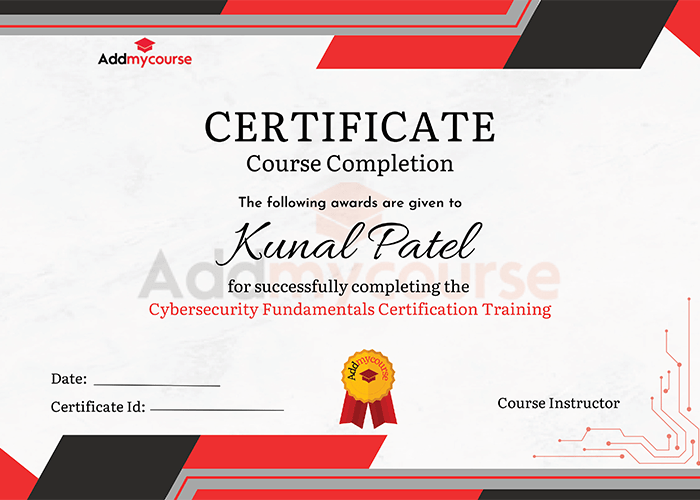
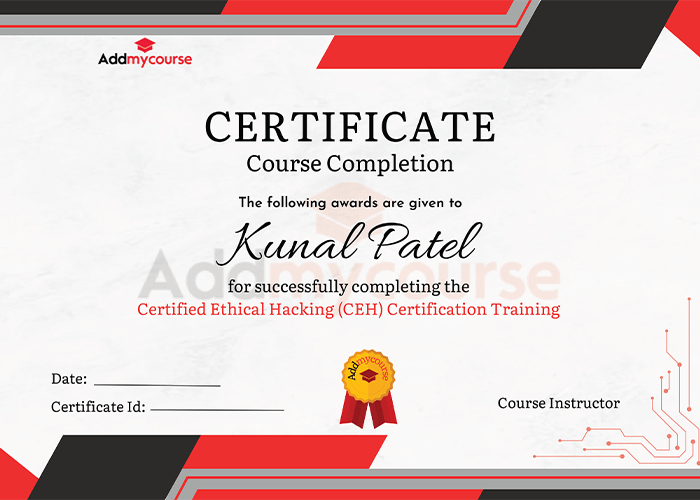
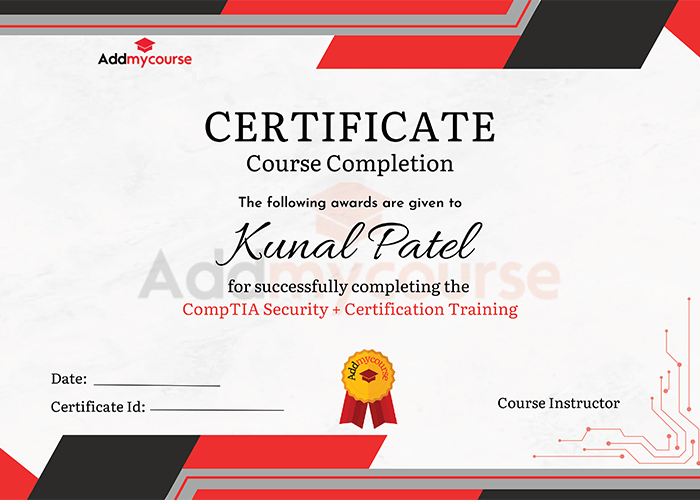
Yes. After completing the program, you will receive a training completion certificate that validates your practical exposure in Network Security Training, Penetration Testing Course labs and structured Cyber Security Certification preparation. This adds strong value to your resume while applying for entry-level security roles.
Yes, we provide resume building, LinkedIn optimisation guidance and mock interview sessions specifically tailored for Information Security Certification and Ethical Hacking Certification career paths. Our goal is to help you confidently transition into professional cybersecurity roles.
If you miss a live class, you will receive access to session recordings through our LMS. This ensures your Cybersecurity Training remains uninterrupted and you continue progressing through the CompTIA Security+ Course and CEH Certification Training modules without delays.
Career growth depends on your consistency and certification success. With dedicated preparation in CEH Certification Training, strong fundamentals from the CompTIA Security+ Course and practical Network Security Training, many learners begin applying for entry-level cybersecurity roles within a few months of course completion
Seeking for verbals of our service quality? Find them here. Everything is transparent and straightforward for your sense of jusitifcation.




Get a Live FREE Demo with us.
© 2023 AddMyCourse. All Rights Reserved
No Cost EMI plans available for 3 & 6 months. Pay in easy installments with zero extra interest. Contact us to avail this offer.